What's New
Variables Thread Inspection: An Investment, Not An Expense

Thread inspection practices directly impact manufacturing, distribution, sales, customer satisfaction, and market share.  Given this relative importance, a review of this facet of Quality Assurance procedures should be included in all annual audits of company operations.  In virtually all instances, an evaluation or comparison of Variables Indicating Gages and Fixed Limit Go and Not Go Thread Ring or Plug Gages will conclusively reveal that variables gaging offers a clear economic advantage over the older fixed gaging system.  As such, variables gaging is a smart investment which directly contributes to the financial bottom line.


Customer Demands


It is universally accepted that customer demands and requirements have been upgraded.  Policies and practices which were acceptable and even emulated several years ago have been superseded by newer and bolder quality initiatives. Accidents/incidents involving sub-standard or counterfeit fasteners have only heightened the customers' concerns and demands for safe, economical product that conforms to the applicable specifications and standards.  QUALITY IS NOT AN OPTION. Thread failures due to dimensionally sub-standard products have adversely impacted operations, created hazardous situations, increased liability, repair and maintenance costs.  Poor or sub-standard product creates high costs and as a result, the astute consumer is demanding quality threaded product.  From an economic viewpoint, it is smart business to buy and use dimensionally conforming products.


In today's competitive business environment, the successful company will always strive to satisfy their customer's needs.    Variables Thread Gaging, with its inherent efficiencies and economic advantages, is far more consistent with this basic goal than traditional Fixed Limit Gages.


Conformance to Specifications


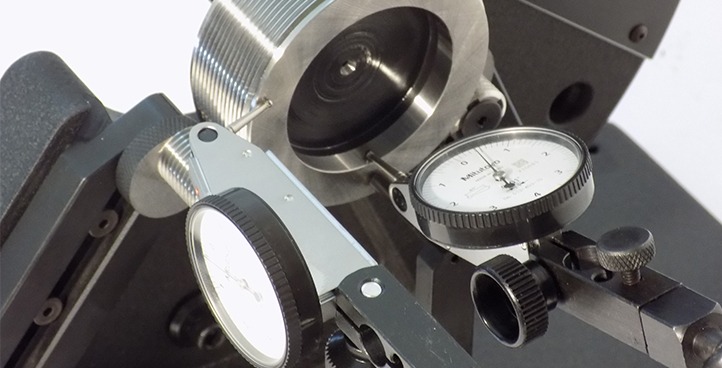
Perhaps the most compelling advantage of Variable Gaging is directly related to its ability to assure screw thread dimensional conformance to specified engineering drawings and tolerances.  In almost all applications, a screw thread must not only assemble with its mating part, but must also stay together under a specific set of design parameters.  In other words, a threaded connection must not only go together, it must stay together.   Variables gaging, designed in accordance with system configurations defined in ANSI/ASME System 22,  can measure the key thread characteristics of Maximum Material - Functional Size and Minimum Material - Pitch Diameter Size and therefore assure that the threaded fastener will perform its intended design function. 


Fixed Limit Gage cannot provide similar degrees of assurance.  As acknowledged in ANSI/ASME B1.3 as well as FED-STD H28 Section 20A, Go and Not Go Thread Ring Gages or Plug Gages will only assure thread assembly, not performance.  Given this limitation, The National Institute of Standards and Technology and the Department of Defense readily acknowledge that GO and NOT GO Thread Ring and Plug CAN NOT assure dimensional conformance.

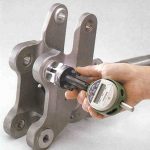
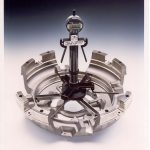
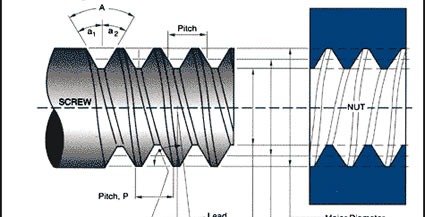
When necessary, Variables Gages can also isolate and quantify deviations in key thread elements and characteristics such as Lead, Flank Angle, Uniformity of Helix, Taper, and Out of Round to assure product conformance and quality.  Once again, Fixed Limit Gages cannot provide similar information.


To summarize, threaded fasteners must be measured to determine the amount of variation from the accepted standard.  Variable gaging provides such measurement with quantitative data that can be directly compared to the thread specification tolerance to determine the degree of measured thread characteristic conformance.  Fixed ring and plug gages provide no such measurement and only assure interchangeable assembly. The industrial world has been using measuring devices such as micrometers or calipers for years to ensure dimensional conformance.  There is no justification for ring and plug gages in today's world for dimensional conformance.  Technically correct thread inspection is a necessity.


Time to Inspect


A careful comparison of the time required to inspect product using fixed ring and plug gages as compared to JOHNSON Variable Gages revealed an approximate 10:1 time advantage of the JOHNSON Variable Gaging System.  (See Figure 1.)  This means that by the time one sample lot was inspected using fixed gages, ten sample lots were inspected using JOHNSON Variable Gages.  This advantage was reported in a 13 July 1990 U.S. Army report on the "Projected Department of the Army Cost/Impact Factors to Implement Proposed MIL-S-7742D and MIL-S-8879C Thread Verification Inspections", prepared by the U.S. Army ARDEC Standardization Office, Picatinny Arsenal, NJ.  One should not forget that upon fixed gage inspection completion, one only knows that at best, parts will assemble (ANSI/ASME B1.3M-1986) whereas with the variables gaging one is assured that the threads are within the specification tolerances (measured value) for pitch diameter, functional diameter, and by default, the flank angle and lead (including helix variation) are within tolerance.  Very fast and simple additional checks will also confirm that circularity, taper, and runout are within tolerance.  Fixed gages can not determine or measure any of these thread characteristics.


Inspection Investment


The quality of threaded parts are universal among successful businesses in the fasteners industry.  A large concern associated with threaded parts centers around the cost of inspection methods.  Variable gaging provides companies with a cost effective investment.

A recent report in a July 13, 1990 U.S. ARMY report on the "Projected Department of the Army Cost/Impact Factors to Implement Proposed MIL-S-7742D and MIL-S-8879C Thread Verification Inspections", prepared by the U.S. ARMY ARDEC Standardization Office, Picatinny Arsenal, NJ,cited an initial cost comparison between Variable gaging and Fixed gaging.  The size ranged from .2500" thru 4.000".  The study found Variable gaging only slightly more expensive while providing measurements and actual values in addition to the fixed gaging system.  The report also notes if the study eliminated the third station for minor diameter inspection, the difference in initial investment would be inconsequential.Statistical Process Control


Thread measurement requirements are also required to fully implement SPC (Statistical Process Control).  SPC is a very dynamic, powerful tool to improve and control thread dimensional conformance, reduce costs - including tooling, decreasing the cost to produce and increasing customer satisfaction.  Accurate thread measurement is a basic industry requirement that fixed gaging simply can not satisfy.


Distribution and Incoming Inspection


Variables gaging offers major economic advantages over fixed gaging to threaded product distributors and to customer incoming inspection functions in the areas of quality control, productivity, and gaging costs.  Customer demands on distributors normally require them to maintain large product inventories from numerous suppliers.  Although customer incoming inspection does not require inventories they do require measurement of a large range of product.  Therefore, a leading gage requirement is to measure a wide range of thread types and sizes in a very time efficient  manner to ensure proper product quality.  Variables gaging clearly offers economic and efficiency advantages.  Not only do variable gages offer the versatility cited above, but they are much more time efficient and less costly when gage wear is considered.


Manufacturing


Variable gaging is extremely cost effective when utilized in a manufacturing environment. During initial production set-up, the operator can measure product using variables gaging to assess key thread parameters.  Based on this information, adjustments can be made to the production process prior to actual manufacture.  As part of this process, threaded product is targeted within the Pitch Diameter tolerance to maximize efficiency in the production run.   As the process degrades, Variables inspection is used to monitor conformance, assuring that the process remains within established tolerances.  If corrective action is required, it can be immediately taken to prevent producing non-conforming product necessitating either scrap or rework.  Fixed gaging does not offer any of these capabilities.  In short, variables gaging allows the operator to optimize his set-up in minimum time and maximize both the production run and the inherent tool life. 


Aside from the benefits of manufacturing efficiency, Variables Thread Inspection also simplifies the issue of dimensional acceptability of manufactured product.  The positive aspects of a objective quantitative assessment of manufactured quality virtually eliminates the disputes which arise from acceptance based on the "operator feel" of Fixed-limit Gages.  Centrilift, a manufacturer of submersible rotary pumps used in oil well drilling, formerly utilized Fixed-limit Thread Gages for the inspection during manufacturing operations.  According to Robert Stewart, a Senior Manufacturing Engineer, the company experienced an average of four thread assembly problems per week during the time they relied on Thread Ring and Plug Gages.  After installation of a Variables Thread Inspection System, assembly problems declined to less than one per month. Clearly, proper thread inspection has increased product quality, reduced manufacturing and assembly costs, and increased customer satisfaction. 


Pilgrim Screw of Providence, Rhode Island has experienced similar success after the installation of a JOHNSON GAGE Variables Thread Inspection System. "Manufacturing efficiency has increased with concurrent reductions in rejections due to thread defects.  As a result, customer satisfaction and confidence in the product of Pilgrim Screw are at an all-time high", according to Gary Grove, President of the corporation. Literally hundreds of companies could be referenced who are currently realizing cost savings benefits.


Variables Thread Inspection can reduce the magnitude of the Thread Gage inventory used to support manufacturing activity.  A single Variables Gage can be used for the inspection a specific thread size both before and after the application of plating or other additive materials without any change in set-up.  The same Variables Gage can also be utilized for all classes of threads (1A, 2A, 3A) as well as threads of special Pitch Diameters.  A different set of Go and Not Go Fixed Limit Gages (with appropriate Setting Plugs) is required for each different class as well as specials and before-plate configurations.


Gage Wear


The results of a comparison of gage element wear of fixed versus variable gaging is presented in Figure 2.  The study showed that by the time JOHNSON gaging elements wear beyond Class "X" tolerance, at least 15 ring gages will have been required to match this wear life.  The fixed gages require one to run the gage along the length of the thread being inspected and then run it back off; this is a complete double wear cycle.  Variable gaging, on the other hand, requires you to snap the gage into place along the threaded product and only rotate the product one revolution to check for thread circularity.  This greatly minimizes wear while providing detailed product inspection with actual measured values.  This wear factor was cited by the Army in their report Conclusions in that, "Attributes Gaging wears 15 times faster than Variables Gaging.  Replacement costs are significant for Method A type gaging".


Conclusions


In today's marketplace, the financial bottom line clearly depends on meeting your customer's needs.  Fixed gaging is not viable in today's quality marketplace.  VARIABLE GAGING IS CAPABLE, COST EFFECTIVE, AND CONTRIBUTES DIRECTLY TO BUSINESS GROWTH AND THE BOTTOM LINE. The world economic situation and customer demands for higher quality threaded products have required industry to aggressively address their financial bottom line.  Reduced or lost markets and business survival are strong motivators.  In these times, careful review of all operations is a must.  For the fastener industry, one area deserving special attention is that of thread gaging.  Product screw threads must perform their intended design function.  To do so, they must conform to the applicable specification in thread size, position, and form.  Accurate and economical thread gaging that will assure dimensional conformance is no longer a luxury, but an absolute requirement.
>>Top
 
 
© 2005 - 2009 Johnson Gage. All rights reserved. Disclaimer
     
Website design by Synergy  
The Johnson Gage Company
534 Cottage Grove Rd. Bloomfield, CT 06002